Greensboro wears a thousand shades depending on where you stand. Morning light off Lake Higgins, rush hour on Bryan Boulevard, the fast sweep of Wendover. From 27401 to 27411 and out to 27409, I’ve worked windshields in every zip, and the story repeats: newer cars don’t treat auto glass like a passive pane anymore. If your vehicle has ADAS, that sheet of glass is part of the car’s brain. The choice between OEM and aftermarket isn’t cosmetic, it’s about whether your safety systems see the world correctly.
I learned that the blunt way a few years back, calibrating an adaptive cruise system on a late‑model SUV near West Market. The customer had gone with a budget windshield. It fit, it looked fine, but the lane camera sat a hair further from the glass than factory spec. The “hair” was enough to make the camera misjudge lane curvature on I‑40. We could dial the calibration in, but it took twice the time and never held as solid as with the factory‑spec glass. That’s when I started telling Greensboro drivers with 2016‑plus vehicles the same thing: if you’ve got ADAS, choose OEM glass first.
Why ADAS and glass are joined at the hip
Modern driver assistance systems rely on a tight recipe. The camera and radar stack expect specific optical properties, known positions, and a controlled field of view. The windshield isn’t a passive window; it’s an optical element with known thickness, curvature, lamination, tint, frit band, and bracket geometry. Change one ingredient and you nudge the camera’s perception, even if the human eye can’t spot the difference.
Two traits decide whether calibration goes smoothly after a replacement: precise bracket placement and matched optical path. OEM glass arrives with camera brackets bonded at factory offsets. The lamination and coatings match the OE spec, right down to the spectral transmission through the shaded band. With many aftermarket panels, the bracket is close but not exact, and the lamination can change how the camera “sees” contrast and distance. Sometimes the difference is harmless. Sometimes it’s the difference between a two‑hour calibration and a whole afternoon of chasing error codes.
Where this shows up in real driving
Greensboro roads give you all the ADAS test cases in one day. The downhill approach to Wendover’s tighter curves. The evergreen shade on Lawndale’s two‑lane sections. The glare when you turn east on Friendly in the late afternoon. I’ve seen:
- Lane‑keeping assist ping‑pong more on non‑OE glass because the camera’s horizon looks a degree off and the system “over‑corrects” to stay centered. Automatic high beams flicker, especially on 27409’s darker corridors, when windshield coatings alter the way the camera evaluates oncoming light. AEB warnings trigger late in the Triad’s stop‑and‑go because the camera’s depth model skews at the edges of the frame with the wrong curvature.
If you drive any of the popular ADAS‑heavy models — RAV4, CR‑V, F‑150, Outback, S‑Class — you’ll feel these differences. Some systems tolerate a broader range. Others, like Subaru’s EyeSight that peers through the glass rather than through a housing attached to it, get fussy about anything that shifts optical clarity or angle.
OEM vs. high‑grade aftermarket: the honest trade‑offs
Aftermarket glass isn’t the villain. For vehicles without ADAS, or for side and back glass where optical paths don’t steer cameras, reputable aftermarket panels can save money without much compromise. Even on ADAS cars, I’ve seen premium aftermarket brands behave well. But experience teaches caution.
With OEM glass, you get:
- Factory‑positioned sensor/camera brackets and mirror mounts aligned to millimeters. Optical properties, acoustic interlayers, and tint gradients that match OE specs, which keeps camera exposure and glare handling predictable. Predictable calibration curves. Static and dynamic calibrations settle quickly and stay stable across temperature swings.
With aftermarket, even good ones:
- Brackets can be a notch low, high, or twisted by fractions of a degree. That forces a wider calibration adjustment and makes the system more sensitive to windshield flex or hot‑cold cycles. The shaded band and IR/UV coatings can alter how the camera perceives contrast. You notice it at dusk near the airport or under the streetlights along Battleground. Fitment tolerances may lead to extra wind noise or a faint whistle on I‑73, which isn’t a safety issue but frustrates owners of higher‑trim models that were whisper‑quiet before.
When drivers in 27409 ask what I’d do if it were my car, my answer rarely changes: for ADAS windshields, go OEM if you can. If budget or parts availability pushes you to aftermarket, choose a premium brand and plan for thorough calibration, including a post‑calibration road test on roads with clean lane markings.
Calibration is not a checkbox, it’s the second half of the job
A windshield swap on an ADAS car is a two‑part mission. The install sets the geometry; the calibration teaches the system its new normal. I’ve run both static calibrations with targets in the bay and dynamic calibrations on the road through 27401, 27403, and out to 27410. Each manufacturer plays by its own rules — clear lane paint, specific speeds, steady curves. The road network around Greensboro happens to serve as a decent calibration lab. The loop we use often for Hondas and Toyotas: West Wendover for speed and steady lines, then a swing through friendly‑but‑busy arterials near 27407 to check stop‑and‑go behavior.
Shops that do this well don’t rush. They scan for codes before the glass ever comes out, document the sensor status, and tell you if a misaligned bumper radar will sabotage the camera’s acceptance. After the glass goes in, they torque the mirror bracket, verify camera seating, and only then run the calibration. If the system wants 20 to 40 minutes of dynamic learning, they give it the miles, not a shortcut.
When mobile service makes sense, and when a shop bay is smarter
Mobile setups have improved. For many vehicles, a mobile installer can handle 27401 mobile windshield repair greensboro or 27409 mobile windshield replacement greensboro with a portable target kit. Still, some calibrations simply behave better indoors, with perfect floor level and controlled lighting. I treat anything that demands multi‑target static calibration, or a brand with fussy procedures, as an in‑shop job in 27409 or nearby 27410. Weather matters too. A gusty afternoon can shift a target panel enough to spoil a static calibration. If your timeline or insurance leans mobile, pick a team that carries both the equipment and the judgment to say no when conditions won’t yield a reliable result.
Insurance, glass choice, and what adjusters rarely explain
North Carolina policies often cover glass with low or zero deductible, but “like kind and quality” can become a debate. If your car shipped with heated acoustic glass, infrared‑reflective coatings, a humidity sensor, a head‑up display, or a specific camera bracket, those are not luxuries; they’re part of the OE package. The right way to read “LKQ” is OE‑equivalent features and performance, not the cheapest panel that happens to fit the hole.
I keep copies of build sheets handy. A VIN decode will list options. This is how we advocate for OEM glass on ADAS cars, or at minimum, an aftermarket panel that is certified to the same optical and acoustic spec with the exact bracket. Insurers in Greensboro respond to documentation. When we present a calibration record showing extended time or unstable results with a non‑OE pane, approvals for OEM in 27409 and neighboring zips usually get easier.
Why 27409 drivers feel the difference most
The airport, the mix of suburban boulevards, and the quick‑to‑highway transitions make 27409 a stress test for ADAS. You go from shaded neighborhood streets to 55 mph lanes in minutes. Lane markings vary. Nighttime glare shifts with every turn. This is exactly where small optical mismatches show up. OEM glass keeps the system’s expectations aligned with reality so those subtle transitions don’t trip your car’s judgement.
I’ve had owners in 27409 who switched from a budget windshield on their first replacement back to OEM on the second. The feedback, almost verbatim: “It finally drives like it did when it was new.” The calibration graph told the same story. Less steering jitter, fewer borderline detections, quicker convergence after startup.
The small details that separate a clean install from a comeback
Two installers can use the same OEM part and produce different outcomes. The craft lives in the prep and the cure. Old urethane must be trimmed to a safe bond line, not gouged out. Pinch welds cleaned, primed properly, and allowed to flash. Fresh urethane laid in an even bead with correct tip size for the vehicle. Set time respected before you hit the road, especially on a hot Piedmont afternoon when temperatures climb inside the cabin. An hour saved on cure can shear an unready bond if you hit a pothole on Battleground Ave. The best shops measure safe drive‑away time as conservatively as the urethane allows.
I’ve also grown picky about glass handling. Micro‑scratches in front of the camera field are invisible to the eye yet matter to the sensor. We stage the windshield on clean stands, never on a bare floor, and wipe with low‑lint cloths that leave no residue where the camera looks out.
If your windshield damage is minor, repair beats replacement
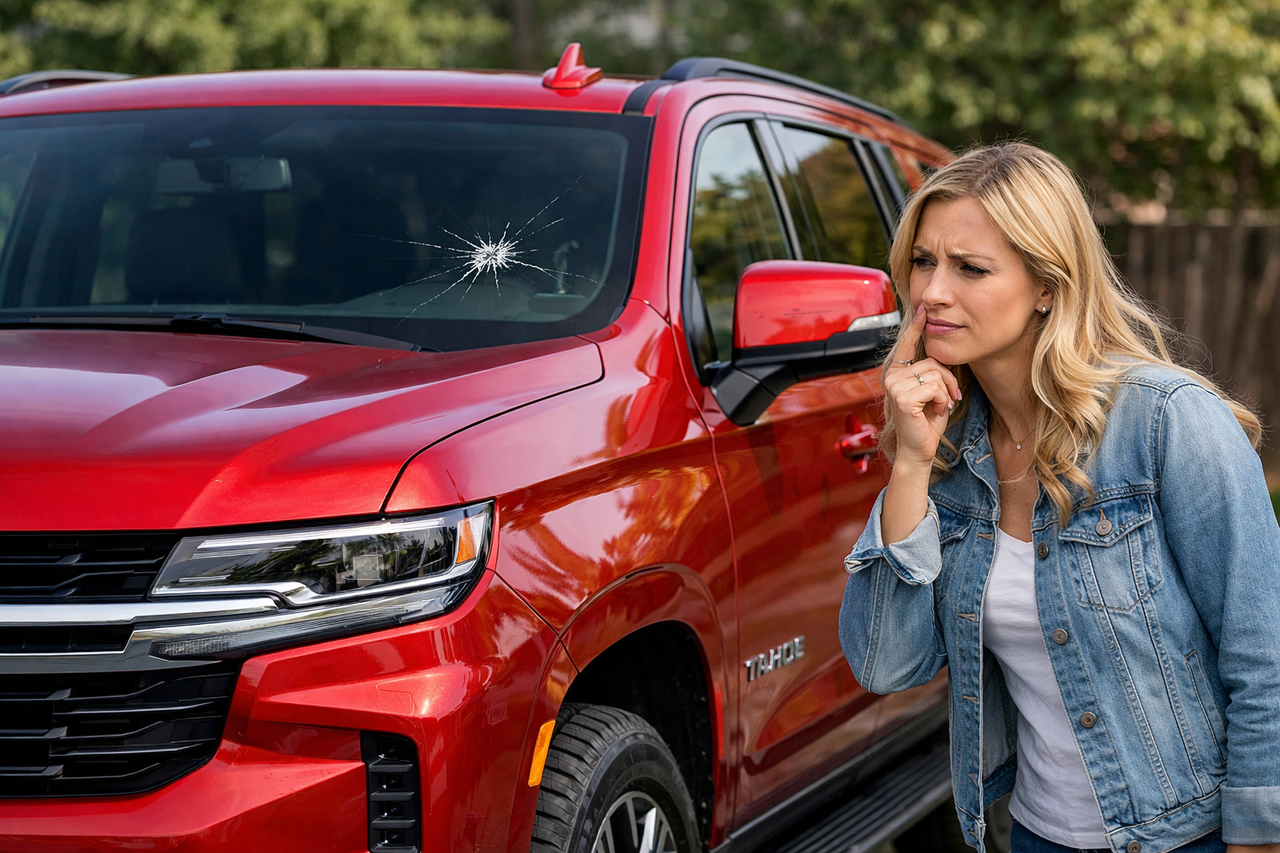
Not every chip deserves a new windshield and a full calibration. A clean star break smaller than a quarter, away from the camera’s view and edges, can often be repaired in 20 to 30 minutes. Good resin stops the crack from marching across the glass when winter temperature swings hit. Drivers searching for 27409 auto glass greensboro, 27401 auto glass greensboro, or 27402 greensboro windshield repair sometimes assume replacement is the only path. It isn’t. A solid chip repair preserves the factory seal and keeps the camera in its original perch.
Newer trucks and SUVs: bigger glass, bigger stakes
Full‑size trucks in the Triad keep growing. The windshields do too. Larger panels flex more, which compounds bracket tolerance issues. On F‑Series and Silverados with camera‑based lane and collision systems, the combination of size, acoustic layers, and camera mount makes OEM glass almost non‑negotiable for predictable calibration. SUVs with panoramic glass and HUD add more constraints. I see it on 27410 SUV windshield replacement greensboro and 27409 truck windshield replacement greensboro jobs weekly. The owners who tow or commute long miles notice driver‑assist behavior more than anyone, because they lean on it daily.
What a strong local shop looks like
In Greensboro, competence shows up as process. They ask for your VIN early. They confirm features: rain sensor, heated wiper park, HUD, humidity sensor, IR coating. They source mobile auto glass service Greensboro the correct glass, not a close cousin. They schedule enough time for installation and calibration, and they warn you if road or weather conditions could delay dynamic learning. They share calibration results without being asked, and the steering wheel feels centered, not a degree cocked, after the job.
The better teams cover the whole map: 27401 greensboro auto glass repair, 27403 greensboro windshield replacement, 27405 mobile auto glass greensboro, 27407 ADAS calibration greensboro, 27410 auto glass calibration greensboro, and of course 27409 OEM glass greensboro. Consistency across zips comes from technicians who keep learning. ADAS updates don’t stand still; neither should the people who service them.
A brief, practical roadmap for ADAS windshield work in Greensboro
- Verify your vehicle’s features by VIN and owner’s manual. If you have forward camera, radar, HUD, or heated glass, plan on OEM. Choose a shop that performs both static and dynamic calibrations, shares reports, and understands the local routes that make dynamic calibrations stick. If insurance pushes aftermarket, request documentation that bracket geometry and optical spec match OE, and prepare to escalate with calibration records if needed. Schedule when weather supports the required calibration. If conditions aren’t right for mobile static targets, book an in‑shop slot in 27409 or nearby. Budget time for safe‑drive‑away cure and a proper road test. Don’t let anyone hurry you out the door while urethane is green.
A note on side, rear, and specialty glass
Side and back glass aren’t tied to ADAS cameras the way windshields are, so aftermarket panels often make sense if they come from reliable suppliers and match tint and defroster spec. Back glass replacement in 27401 or 27404 tends to be straightforward if the defroster grid is intact and the antenna lines are properly reconnected. Sliding truck rear windows, on the other hand, demand careful alignment to avoid rattles on rough stretches of Benbow or Cornwallis.
For rear vision systems that use a camera‑mirror hybrid, the tailgate camera deserves its own alignment check after any rear glass or hatch work. I’ve seen mirror‑cam displays tilt just enough to annoy you on the 27402 morning run. Small adjustments cure big irritations.
When aftermarket works — and when it doesn’t
You’ll hear stories where high‑tier aftermarket glass calibrated clean on a 2018 Camry and ran for years without a hiccup. I have those stories too. The reason my default leans OEM is not fear, it’s probability. With OEM, calibrations converge faster, margin for temperature swings is larger, and long‑term stability is better across seasons. On vehicles with forgiving ADAS and abundant, proven aftermarket options, a premium non‑OE pane can be rational. On brands with hypersensitive camera stacks or HUD, the math flips back to OEM. Subaru EyeSight windshields are a classic case. Late‑model German sedans with HUD are another.
What drivers notice after a truly correct job
The first thing is silence. No whistle from the A‑pillars. No added wind rush at 70 mph on I‑840. The second is confidence. Lane‑keeping centers the car without that nervous hunting. Adaptive cruise brakes and releases like a human with good judgment. Automatic high beams stop playing peekaboo when you pass through patchy lighting near Brassfield.
If you replaced your glass before and lived with small quirks afterwards, and you now switch to OEM in 27409 with a meticulous calibration, you’ll likely say what a CR‑V owner told me last fall: “It drives exactly like I remember on day one.” That sentence is the litmus test.
The Greensboro advantage: a city that helps calibrations stick
Not every town is friendly to ADAS work. Greensboro gives us straight, well‑marked stretches for dynamic routines and accessible shop space for static targets. Whether we’re handling greensboro windshield repair 27409, greensboro auto glass replacement 27410, or a tight timeline for same‑day service near 27407, we can usually execute the full stack in one go. That efficiency lowers the temptation to cut corners. You get the right glass, the right calibration, and time to let the urethane set before you roll out.
Final judgment from the field
If your car has driver assistance features and you’re in or near 27409, OEM glass is the smart bet. It lines up the invisible geometry your cameras expect, keeps calibrations short and stable, and preserves the feel the engineers tuned when the car left the factory. Plenty of choices in life reward compromise. Windshields on ADAS cars aren’t one of them.
For simple chips, fix them early and keep the factory bond. For complete replacements, treat installation and calibration as one job, not two invoices. If you need help anywhere from 27401 greensboro windshield repair to 27409 OEM glass greensboro and full ADAS calibration, look for a team that sweats the small stuff and shows you the proof on screen. The road will tell you the rest.